Add Row
Add Element
paul weaver arborist kansas city
update

Paul Weaver Arborist Blog
913-915-4165

update
Add Element
  • Home
  • Categories
    • tree spraying kansas city
    • Ash borer treatments Kansas City
    • Tree fertilization Kansas Cit
    • Tree disease diagnosis Kansas City
    • Annual tree health assessments Kansas City
    • Expert advice from a licensed arborist kansas city
    • Tree Diagnosis Kansas city
    • Organic tree care Kansas City
    • Arborist Kansas City
    • tree care kansas city
    • tree service kansas city
    • organic tree care
  • All Posts
  • tree spraying kansas city
  • Ash borer treatments Kansas City
  • Tree fertilization Kansas Cit
  • Tree disease diagnosis Kansas City
  • Annual tree health assessments Kansas City
  • Expert advice from a licensed arborist kansas city
  • Paul Weaver Arborist Kansas City
  • Tree Diagnosis Kansas city
  • Organic tree care Kansas City
  • Arborist Kansas City
  • tree care kansas city
  • tree service kansas city
  • organic tree care
June 13.2025
1 Minute Read

Annual tree inspection KC: Avoid Costly Damage This Year

Did you know Kansas City homeowners lose over two million dollars every year due to preventable tree problems like emerald ash borer infestations and unnoticed structural damage? The culprit isn’t just bad weather—it’s neglecting an annual tree inspection KC. With beautiful, mature trees lining our neighborhoods, it’s easy to take their health for granted until a single storm leaves you with thousands in property damage or unexpected tree removal expenses. This guide will show you exactly how professional tree care and annual inspection can save your home, wallet, and landscape in Kansas City.
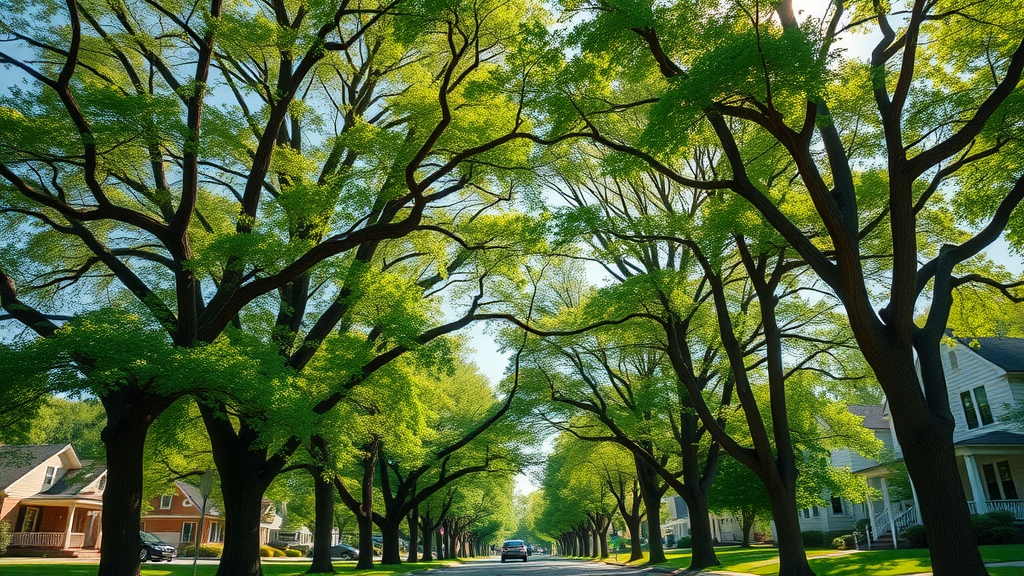
Annual tree inspection KC in a serene Kansas City residential neighborhood with leafy trees and healthy foliage

Why Annual Tree Inspection KC Is Essential: The Kansas City Cost of Tree Neglect

"Property owners in Kansas City lose hundreds of thousands of dollars each year due to preventable tree damage—annual inspections can eliminate most risks."

If you own property in Kansas City, annual tree inspection KC isn’t just maintenance—it’s essential protection. Storms, pests, and hidden disease can silently compromise your tree health and your home’s safety. Local statistics reveal over $800,000 annually goes toward storm-damaged tree clean-up. Add to that a crippling $2 million spent combating emerald ash borer infestations in ash trees , and it’s clear the real cost of neglect is far higher than your last tree service bill.

The good news is, these costs are largely preventable. Professional tree inspection by an ISA certified arborist detects signs of disease, pest invasion like the emerald ash borer, and unstable or leaning trees before they become emergencies. Instead of facing high-cost tree removal after disaster strikes, smart Kansas City homeowners safeguard their properties with regular, proactive care and tree preservation .

What You'll Gain from This Guide to Annual Tree Inspection KC

  • Understand the ROI of professional tree inspection and Kansas City tree care
  • Learn to identify threats like emerald ash borer and tree diseases with annual tree inspection KC
  • Discover tips from ISA certified arborists for safeguarding tree health
  • Assess the difference between DIY and expert tree inspection in Kansas City

Kansas City's Tree Health Landscape: Statistics, Problems, and Solutions

Problem Estimated Annual Cost in KC Preventable with Inspection?
Storm-damaged tree clean-up $800,000+ Yes
Emerald ash borer infestation $2M+ Yes
Leaning tree emergencies $300,000+ Yes
Property value loss $500,000+ Yes

These numbers are not just statistics—they represent lost opportunities, increased insurance claims, and property value depreciation for Kansas City families. Tree care is about more than aesthetics; it’s a direct investment in your home’s safety and marketability. By targeting the likes of ash tree infestations and storm risk with annual checks, you turn costly problems into manageable, affordable maintenance tasks—often with special packages from local arbor masters and expert tree services .

Choosing routine tree inspection can also help you comply with local city ordinances, which increasingly require prompt attention to hazardous or damaged trees . This means you and your neighbors both benefit from improved safety standards, minimized emergency removals, and healthier, longer-lasting city canopy.

Annual Tree Inspection KC: What Certified Arborists in Kansas City Check

ISA certified arborist performs annual tree inspection KC on mature urban ash tree

Professional tree inspection goes far beyond a quick glance at your garden. ISA certified arborists in Kansas City apply rigorous standards, using both visual and hands-on examination techniques to uncover early signs of trouble in your trees. This could be the first stage of plant health care or the moment you save a landmark tree from fatal ash borer damage.

An annual inspection typically covers:

  • Tree identification and species-specific risk analysis
  • Bark and foliage health checks
  • Detection of boreholes, cankers, or fungal growth
  • Inspection of root flare and basal injuries
  • Detection of structural weaknesses or leaning tree hazards
  • Assessment of pruning, cabling, or fertilization needs

This process ensures that everything—from the health of your ash trees to the safety of your children playing beneath their shade—is proactively managed for the coming year.

Identifying Ash Trees, Emerald Ash Borers, and Other Major Risks

Identifying the unique risks posed by ash trees is critical in Kansas City, where the emerald ash borer has devastated urban and suburban canopies. ISA certified arborists are trained to distinguish ash species, spot the telltale D-shaped exit holes of the emerald ash borer , and devise targeted responses before it’s too late.

But it’s not only ash trees at risk: oak wilt, Dutch elm disease, and fungal cankers can weaken a tree’s structure or spread contagion to nearby properties. Annual tree inspection KC pinpoints these silent threats, triggers early intervention, and helps you avoid burdensome tree removal or loss of valued landscape assets.

Tree Health Indicators: Signs Kansas City Experts Look For
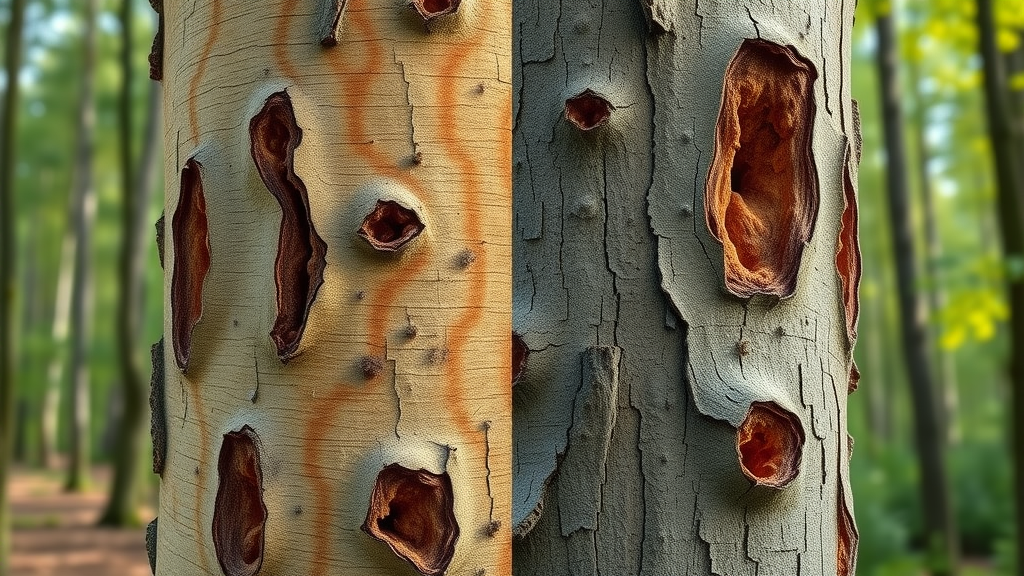
Close-up image: healthy vs infested ash tree trunk, emerald ash borer signs, annual tree inspection KC

During a tree evaluation, certified arborists look for visible changes in bark texture, discoloration on leaves, and unusual dieback or dead branches in the tree’s upper crown. Tiny holes, sawdust-like frass, or peeling bark layers can indicate an underlying ash borer or fungal problem, while uneven canopies may reveal shaded, stunted, or damaged tree branches poised to break.

Root collar examination reveals girdling roots, mushrooms, or soil heaving around the base, all of which threaten a tree’s stability and lifespan. By tracking these tree health indicators, experts can issue rapid, cost-saving remedies before your property or family is at risk.

Damaged Tree Assessment: Structural Stability, Leaning Tree Risk, and Mitigation

Tree inspection isn’t just about plant health—it’s also about safety. Kansas City’s wild storms can compromise large trunks, split branches, or topple leaning trees into homes and streets alike. Certified arborists conduct detailed structural assessments, checking for vertical cracks, internal decay, weak branch attachments, and changes in root plate stability.

In cases where risk is detected, mitigation steps might include bracing, cabling, precise pruning, or safe removal of a damaged tree . Early inspection and expert advice take you from potential hazard to long-term safety, ensuring your property remains secure through every season.

Tree Care, Plant Health, and Preservation with Annual Tree Inspection KC

Effective tree care is about more than responding to crises—it's about extending the life, beauty, and value of your trees through careful, ongoing plant health care . In Kansas City, the difference between a vibrant, sustainable landscape and one facing repeat emergencies often comes down to regular annual inspections and the specialized expertise of arbor masters .

Routine evaluation by an ISA certified arborist addresses nutrient deficiencies, pest problems, and environmental stressors, all while ensuring compliance with your property’s unique planting and irrigation needs. Through fertilization, targeted pesticide application, and tailored pruning, arbor masters preserve not only your trees, but also the overall curb appeal and value of your property.

The Role of ISA Certified Arborists and Arbor Masters
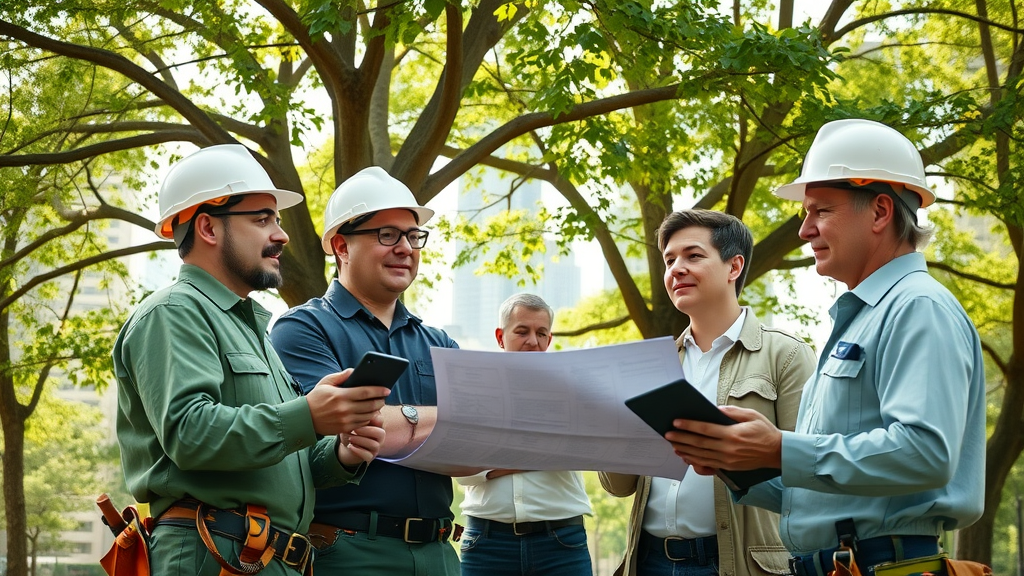
ISA certified arborists (arbor masters) discussing tree health and plant health care plan in Kansas City

The expertise brought by ISA certified arborists and reputable arbor masters is unmatched. They hold credentials from the International Society of Arboriculture and undergo continual education in plant science, pest control, and local KC climate challenges. You get peace of mind knowing your tree assessment is both comprehensive and best-in-class.

Whether it’s Paul Weaver Arborist—or another fully insured, expert team—these professionals go beyond surface care. They offer in-depth reports, digital documentation, and a full range of tree services to keep your landscape lush and resilient. With the right arbor master, each annual tree inspection KC is both a preventative and a value-adding step for your property.

Tree Preservation: Extending the Life and Value of Kansas City Trees

Tree preservation isn’t a single action—it’s a culture of proactive, science-backed stewardship. Annual tree inspection KC is your gateway to early disease detection, storm damage prevention, and a longer, healthier life for signature oaks, maples, elms, and ash trees on your land. Each healthy, mature tree can add thousands in property value and massively reduce yearly landscape costs.

Through careful monitoring and strategic interventions, you also protect your neighborhood ecosystem, minimize insurance liability, and set your home apart in the competitive Kansas City market. Healthy trees mean healthier streets, quieter summers, and improved air quality for generations to come.

How Annual Tree Inspection KC Protects Against Costly Emergencies

  • Spotting hazardous trees before storms and heavy winds
  • Preventing ash borer devastation in ash trees
  • Reducing emergency tree removal costs

Before and after: Damaged tree leaning toward home vs healthy secured after annual tree inspection KC

Many Kansas City homeowners are shocked by the costs associated with last-minute tree removal , storm damage, or liability claims from falling limbs. A single unnoticed damaged tree or leaning tree can put your roof, vehicles, and loved ones in serious danger—often when you least expect it. An annual tree inspection KC acts as your first and best defense against the unpredictable.

Certified arborists know how to spot high-risk threats long before they become emergencies, giving you time to address issues safely and affordably. Efforts like proactive cabling, trimming, or treating trees for emerald ash borer infestation consistently prove to be 80% less costly than post-disaster cleanup and emergency tree services . It’s the definition of a smart, preventative investment.

Comparing Kansas City Tree Inspection Services: What to Expect and How to Choose

Service Provider ISA Certified? Scope of Inspection Typical Cost Emergency Service?
Paul Weaver Arborist Yes Root-to-crown, ash borer focus $$ Yes
Local Tree Specialist A No Visual assessment only $ No

The Kansas City market is full of options for tree inspection and tree services, but not all providers are created equal. When comparing companies, prioritize those with ISA certification —these experts offer full liability coverage, advanced detection tools, emergency response, and specialized care for threats like the emerald ash borer . Generic providers may be cheaper up front, but often miss deeper, costlier risks lurking beneath the bark.

Always ask about provider credentials, scope of inspection, typical response times, and whether emergency service is included. The best value will usually be from a fully insured, ISA certified arborist whose team understands Kansas City’s unique tree preservation challenges—and offers transparent pricing packages with no surprises.

Annual Tree Inspection KC Pricing and Packages

Pricing for annual tree inspection KC varies based on several key factors, including your property size, tree types, age, and overall plant health needs. Expect to invest more if you have legacy ash trees or several mature oaks needing thorough tree preservation planning, versus a newly planted yard with smaller shrubs.

Typical Cost Factors in Kansas City: Property Size, Tree Variety, and Health Care Complexity

Here’s what typically shapes the price of an annual inspection:

  • Property Size: Larger lots require more time for a complete tree inspection, especially if your landscape includes high canopy coverage.
  • Tree Variety: Properties with ash tree populations or vulnerable species like elms will require more invasive and technically detailed assessments, often with lab testing for pests or pathogens.
  • Plant Health Care Complexity: If you have previously damaged trees , historical disease issues, or advanced age specimens, the cost will rise to reflect the complexity and expertise needed for thorough diagnosis and reporting.

On average, expect to pay between $100-$400 for a thorough root-to-crown annual tree inspection KC, with bundled discounts for larger or multi-property contracts.

Seasonal Discounts, Multi-Property Tree Service Listings, and Special Offers for Tree Inspection KC

Smart homeowners can save even more by taking advantage of local seasonal specials. Many arbor masters and certified arborists offer spring or fall promotional rates, particularly if you book more than one property or refer a neighbor. Some companies even bundle tree service with fertilization, pest treatment, or discounted emergency callouts when you commit to an annual maintenance plan.

Tip: Ask about current offers during your first call. Reputable arborists will be transparent about pricing tiers, group rates, and the value of early booking ahead of KC’s storm and pest seasons.

Case Study: Annual Tree Inspection KC Prevents Expensive Tree Removal

"A single inspection by an ISA Certified Arborist saved my Kansas City home $2,500 in emergency removal costs—don’t skip yours." – Satisfied Customer

Take the story of a Brookside resident who, thanks to a thorough annual tree inspection KC, discovered a mature ash tree at high risk for emerald ash borer infestation. Instead of facing an emergency removal days later during a thunderstorm, the homeowner got ahead with targeted treatment and structural bracing, saving thousands and preserving neighborhood canopy. These real-world outcomes are everyday proof that smart, regular tree inspection is a bankable investment for Kansas City property owners.

Video: Walkthrough of a Professional Annual Tree Inspection KC

Want to see an annual tree inspection KC in action? Watch our video showing step-by-step how an ISA certified arborist checks for subtle disease, pest entry points, structural integrity, and provides instant recommendations in real time. Discover what to expect, what questions to ask, and how proactive care cuts your risks and long-term costs.

Video: Real-World Examples of Damaged Tree Dangers in Kansas City

Our second video reel highlights dramatic before-and-after footage: leaning trees safely secured, cracked limbs removed, and active emerald ash borer caught before mass infestation. See the impact of professional intervention and exactly how routine walk-throughs keep Kansas City families, homes, and vehicles protected year-round.

Answering Your Kansas City Tree Inspection KC Questions

How often should I have my trees inspected?

  • Annual tree inspection KC is recommended for healthy properties; biannual for older/damaged trees or ash trees at risk of emerald ash borer.

Kansas City’s unpredictable weather patterns and pest cycles demand regular tree inspection. Even healthy trees need an annual check, while aging specimens or those with a history of storm damage may require biannual attention from professionals to catch problems early and ensure tree preservation .

Who can tell me what's wrong with my tree?

  • ISA Certified arborists and local Kansas City professional tree care experts conduct thorough tree health and plant health evaluations.

If you notice leaf loss, unusual growths, or sudden dieback, a certified arborist—not a home inspector or landscaper—provides the necessary plant health diagnosis and tailored solutions for your needs.

Does a home inspector examine the trees in the yard?

  • No, home inspectors do not evaluate tree health or risks—a dedicated annual tree inspection KC by a certified arborist is required.

Home inspections typically cover roofs, foundations, and basic outdoor concerns—but miss detailed tree health assessments, hidden pests, and structural weaknesses. Only a focused, expert annual tree inspection KC delivers this peace of mind.

What are the different types of tree inspections?

  • Annual visual inspections
  • Storm or post-damage assessments
  • Emerald ash borer and ash tree specific inspections
  • Comprehensive plant health care reviews

Kansas City professionals offer a range of inspection types to match your property’s current needs, tree species, and recent weather or pest threats—giving you year-round flexibility in tree care management.

Kansas City Homeowners: Why Annual Tree Inspection KC is a Smart Investment

  1. Safeguard property and plant health from severe weather
  2. Boost home value with proactive tree preservation
  3. Access professional tree services for swift problem resolution

When it comes to tree health and plant health care , prevention is always less expensive than repair. Smart Kansas City property owners choose annual tree inspection KC to avoid unnecessary risk, improve their outdoor environment, and keep long-term maintenance costs in check.

Frequently Asked Questions about Annual Tree Inspection KC

  • How quickly can I schedule an annual tree inspection in Kansas City?
  • What is included in a professional tree inspection package?
  • Do I need a permit for tree removal if damage is discovered?

Most arbor masters and tree service companies in Kansas City can schedule within days of your call—especially during off-peak seasons. A typical package includes full visual inspection, written recommendations, and digital records; permits for tree removal are handled by your provider if major intervention is required due to damage or city ordinance.

Book Your Annual Tree Inspection KC Today for Peace of Mind

"Don’t let neglect turn your trees into liabilities—call Paul Weaver Arborist 913-915-4165 today to schedule your annual tree inspection in Kansas City."

Act now and protect your trees and property investment. Call Paul Weaver Arborist at 913-915-4165 to book your annual tree inspection KC and enjoy complete peace of mind this year.

Annual tree health assessments Kansas City

8 Views

Write A Comment

*
*
Please complete the captcha to submit your comment.
Related Posts All Posts

Yellowing leaves on a Pin Oak in Kansas City - A silent killer

Iron Chlorosis in Kansas City Trees:What’s Really Causing It and How to Fix ItYou drive through a neighborhood in Kansas City and notice it right away.Bright yellow leaves where there should be deep green. Veins still holding color, but everything in between fading out. It shows up fast in maples, pin oaks, and ornamental trees, and once you see it, you start noticing it everywhere. Dont guess get a professional tree diagnosis in kansas cityThat’s iron chlorosis. Over 3 decades as an Arborist, I can tell you this is one of the most misdiagnosed and mistreated tree issues in the Kansas City area. And in many cases, the way it’s commonly treated actually makes the problem worse over time.What Is Iron Chlorosis in Trees?Iron chlorosis is a condition where a tree is unable to produce enough chlorophyll due to a lack of usable iron within the leaf.The key word there is usable.In many cases, iron is present in the soil. The tree just can’t access it. That’s why iron chlorosis in trees is not always a deficiency—it’s often an uptake problem tied directly to soil conditions.Over 3 decades as an Arborist, I’ve also seen cases where iron levels were actually in excess based on leaf tissue analysis, yet the tree was still showing classic chlorosis symptoms. That tells you right away the issue isn’t a lack of iron—it’s a breakdown in how the tree is processing and utilizing nutrients.That distinction is where most treatments go wrong.Why Iron Chlorosis Is So Common in Kansas CityKansas City soils create the perfect conditions for iron chlorosis to develop.The heavy clay soils found throughout the area tend to compact easily, hold moisture, and limit oxygen at the root level. On top of that, many soils in the region trend alkaline, which further reduces iron availability.In my experience as an Arborist working across Kansas City, this combination leads to a consistent pattern. Trees have iron in the soil, but the chemistry and biology of the soil prevent the tree from using it effectively.And in some cases, even when iron is already present in adequate—or excessive—levels, trees still show chlorosis because the system itself isn’t functioning properly.Why Traditional Iron Chlorosis Treatments Fail The standard response to iron chlorosis is simple. Apply iron.Liquid treatments, injections, soil drenches—sometimes repeated year after year.I spent years working within that model, and I can tell you it often produces temporary cosmetic improvement at best.Here’s the problem.If the soil conditions aren’t addressed, the tree still can’t properly uptake nutrients. Even more concerning, I’ve seen situations where additional iron was applied to trees that already had elevated iron levels based on leaf tissue analysis.The result isn’t improvement. It’s added stress to an already struggling system.Over time, repeated chemical applications can disrupt soil biology, reduce natural nutrient cycling, and contribute to runoff that affects surrounding landscapes and water systems.This is where the “1-800-CHEMLAWN” approach shows up—treating symptoms instead of understanding the cause.What’s Really Causing Iron ChlorosisIron chlorosis in trees is almost always tied to soil function.Compacted soil reduces oxygen availability. Poor drainage creates stress around the root system. Alkaline conditions limit iron solubility. Declining microbial activity slows nutrient cycling.All of these factors combine to create a situation where iron is present, but unavailable.And in some cases, as I’ve seen in the field, iron may even be present in excess, but still unusable due to poor soil biology and root dysfunction.In other words, the system isn’t working.And when the system isn’t working, adding more inputs doesn’t fix it.When Should You Treat Iron Chlorosis?Timing and severity matter.In my experience as an Arborist, iron chlorosis should be approached based on how far the tree has declined.In early stages, where symptoms are mild, the focus should be on improving soil conditions and restoring function. That’s where long-term correction begins.But when chlorosis progresses into more advanced decline—where yellowing becomes widespread, canopy density drops, and overall tree health begins to deteriorate—that’s when deeper diagnostics become critical.This is where leaf tissue analysis becomes especially valuable.It allows us to determine whether the issue is true deficiency, nutrient imbalance, or a situation where nutrients like iron are already present but not being properly utilized.In more severe cases, this is often the turning point between continued decline and recovery.Why Soil Health Is the Real SolutionIron chlorosis is not a surface-level issue, and it doesn’t have a surface-level fix.The real solution is improving the environment the tree depends on.That means addressing compaction, improving oxygen flow, and supporting microbial life that drives nutrient availability.When soil biology is functioning properly, nutrients—including iron—become available in a form the tree can actually use.That’s when you see real improvement that lasts.What This Looks Like in the FieldI see this across Kansas City every year.A tree begins to yellow. Treatments get applied. The color improves briefly, then fades again the following season.The cycle repeats.When leaf tissue analysis is finally performed, it often shows that iron levels are already sufficient—or even elevated—yet the tree is still showing chlorosis.That’s when it becomes clear the issue isn’t deficiency.Once the focus shifts to soil health and root function, the tree begins to stabilize. Color improves. Growth returns. The canopy fills back in over time.That’s not a quick fix. It’s a correct fix.Why Iron Chlorosis Keeps Coming BackIf iron chlorosis is treated as a deficiency instead of a system failure, it will continue to return.That’s why so many homeowners find themselves treating the same tree year after year with little long-term improvement.Until the soil environment is corrected, the underlying issue remains.And that’s something I’ve seen repeatedly over 3 decades as an Arborist.Understanding the Bigger Picture of Tree Decline Which one wouldyou prefer?Iron chlorosis is often just one piece of a larger issue.If a tree is struggling with nutrient uptake, there are usually deeper problems at play, including compaction, root stress, and biological decline in the soil.If you want to better understand how these issues connect, take a look at our guide on common causes of tree decline in Kansas City, where we break down what leads to long-term stress in urban trees.And if you're looking for a more effective, soil-first approach to tree service Kansas City, working with an Arborist who understands soil biology and plant function will make a measurable difference.Final Thoughts From the FieldOver 3 decades as an Arborist has shown me that iron chlorosis isn’t really about iron.It’s about whether the system supporting the tree is functioning properly.You can keep adding inputs, or you can correct the conditions that allow the tree to thrive.When soil health is restored, trees are able to access nutrients naturally, regulate growth, and maintain long-term stability without repeated intervention.And that approach protects more than just the tree. It protects the soil, the water, and the environment everything depends on.

Why Most Tree Services Misdiagnose Tree Problems 

Why Most Tree Service Kansas City Companies Misdiagnose Tree ProblemsMost tree service Kansas City companies misdiagnose tree problems—and it’s one of the biggest reasons trees continue to decline even after treatment. Homeowners across Kansas City often call a company when a tree starts to look unhealthy, expecting a clear answer and a solution. Instead, what they often receive is a surface-level diagnosis based only on visible symptoms. As an ISA Certified Arborist in Kansas City with over 35 years of experience, I’ve seen firsthand how this approach leads to repeated treatments, wasted money, and ultimately the loss of trees that could have been saved.A tree begins to decline, the leaves discolor, the canopy thins, or branches begin to die back. A typical tree service Kansas City provider may identify insects, disease, or nutrient deficiency and recommend spraying or fertilization. But a year later, the tree looks worse. That’s not bad luck—that’s misdiagnosis.The Real Problem with Tree Diagnosis in Kansas CityThe biggest issue with tree service Kansas City diagnostics is that most companies are trained to treat what they can see, not what is actually causing the problem. They focus on leaf symptoms, insect presence, bark damage, and visible stress indicators. While these observations are important, they are rarely the root cause of decline. Everything is connected. Get a free tree diagnosis in Kansas City from our certified arborists today. In Kansas City, tree health problems are most often tied to soil conditions, root damage, and environmental stress. Heavy clay soils, compaction from construction, poor drainage, and years of chemical applications all contribute to declining tree health. These are not issues that can be identified by looking at the canopy alone. An experienced ISA Certified Arborist Kansas City understands that everything happening above ground is a reflection of what’s happening below ground. Everything is connected. Get a free tree diagnosis from our certified arborists today. Why Tree Service Kansas City Companies Get It WrongThere are several reasons why misdiagnosis is so common in the tree service Kansas City industry.First, speed and volume. Many companies are built around high-volume service models. They move quickly from property to property, offering fast diagnoses and immediate treatment recommendations. This doesn’t allow time for proper evaluation of soil health, root conditions, or site history.Second, outdated training. Traditional arboriculture training has heavily emphasized pest and disease management using chemical treatments. While those tools have their place, they often overshadow the importance of soil biology, root function, and environmental factors.Third, business incentives. It’s easier—and more profitable—to sell a treatment than to explain complex soil-related issues. As a result, many tree service Kansas City providers default to recommending sprays or fertilizers rather than addressing foundational problems. Commonly Misdiagnosed Tree Problems in Kansas CityIn Kansas City landscapes, I’ve seen the same misdiagnosed issues repeat over and over.Yellowing leaves are often labeled as nutrient deficiencies, when in reality, compacted soil is preventing roots from absorbing nutrients. Insect infestations are treated aggressively, even though they are often a symptom of a stressed tree rather than the cause. Fungal issues are blamed for decline, when they are frequently opportunistic organisms attacking already weakened trees.A knowledgeable ISA Certified Arborist in Kansas City recognizes that these symptoms are signals, not causes. Treating them without addressing the underlying issue leads to temporary improvement at best—and long-term decline at worst.If you want a deeper understanding of this, see why trees decline in Kansas City landscapes and how soil conditions drive most problems.What a Proper Tree Diagnosis Should IncludeA true diagnosis from an ISA Certified Arborist Kansas City goes beyond visual inspection. It includes evaluating the entire ecosystem the tree depends on.This means assessing soil compaction, oxygen availability in the root zone, organic matter levels, microbial activity, drainage patterns, and historical site conditions such as construction damage or grading changes. Without this level of analysis, any diagnosis is incomplete.A professional tree service Kansas City provider should be able to explain not just what is happening, but why it is happening—and how the recommended solution addresses the root cause.The Role of Soil in Tree Health in Kansas CitySoil is the foundation of tree health, especially in Kansas City where clay-heavy soils dominate the landscape. These soils are prone to compaction, which reduces oxygen availability and limits root growth. When roots cannot function properly, the entire tree begins to decline.Healthy soil is a living system. It contains microorganisms that break down organic matter, cycle nutrients, and support root development. When that system is disrupted—whether by construction, overwatering, or chemical use—the tree loses its ability to sustain itself.An experienced ISA Certified Arborist Kansas City focuses on restoring this system, not just treating symptoms. That’s the difference between short-term improvement and long-term health.Why Chemical Treatments Often FailMany tree service Kansas City companies rely heavily on chemical treatments because they produce fast, visible results. But these results are often temporary.If a tree is declining due to poor soil conditions, applying fertilizer or pesticides does not fix the underlying issue. In some cases, it can make things worse by disrupting beneficial soil biology.Chemical treatments should be used selectively—not as a default response. A proper diagnosis determines whether they are necessary at all. This is where working with a true ISA Certified Arborist in Kansas City makes a significant difference.A Better Approach to Tree Service in Kansas CityThe most effective tree service Kansas City approach is one that looks at the entire system.This includes soil health, root function, environmental stress, and site history. Instead of reacting to symptoms, the goal is to restore balance and support the tree’s natural processes.If you’re evaluating a tree service Kansas City company, ask how they diagnose problems. Do they evaluate soil conditions? Do they explain root health? Or do they simply recommend treatments based on what they see?Those answers will tell you everything you need to know.You can also explore organic tree care Kansas City methods that focus on soil biology and long-term sustainability.How to Avoid Tree MisdiagnosisHomeowners in Kansas City can avoid costly mistakes by asking the right questions.Ask what is causing the problem—not just what it looks like. Ask how soil conditions are affecting the tree. Ask whether the recommended treatment will improve long-term health or just provide a temporary fix.A qualified ISA Certified Arborist Kansas City should have clear, confident answers to these questions. If they don’t, it may be worth getting a second opinion.Final Thoughts from an ISA Certified Arborist Kansas CityMisdiagnosis is one of the leading reasons trees continue to decline despite treatment. When tree service Kansas City companies focus only on visible symptoms, they miss the underlying issues that actually determine tree health.After more than 35 years as an ISA Certified Arborist, I’ve learned that the best results come from understanding the full system—soil, roots, environment, and biology working together.If you’re looking for a tree service Kansas City provider that focuses on real diagnosis and long-term solutions, start by working with someone who looks below the surface—not just at what’s visible.

The Truth About Pre-Emergent Chemicals and Why I Suggest to Stop Using Them

A 35+ Year Arborist’s Perspective on Tree Spraying Services in Kansas City“Spraying trees with the nutrients they need to survive — not covering up symptoms with chemicals.”That’s not just a slogan. It’s a philosophy that took me more than three decades in this industry to fully understand.In my 35+ years as an Arborist, I spent a large portion of my career doing exactly what most tree spraying services in Kansas City still do today—applying chemical treatments. Herbicides, fungicides, insecticides, and pre-emergent weed control products were considered standard practice.At the time, that’s what the industry taught. That’s what homeowners expected. And frankly, it’s what most companies still rely on today.But over time, I started noticing something that didn’t sit right.The same properties needed the same treatments… year after year.The same trees continued to struggle.And the same problems kept coming back.That’s when I began to question whether the system was actually working. The Problem with Traditional Tree Spraying in Kansas CityMany homeowners searching for tree spraying companies near me assume chemical applications are the only way to protect their trees.And on the surface, it can look like they work.Leaves green up. Insects disappear. Lawns look uniform.But in reality, most of these treatments are addressing symptoms—not the underlying cause.As an ISA Certified Arborist, one of the most important lessons I’ve learned is this:If you’re constantly treating the same problem, you’re not solving it.Traditional tree spraying services in Kansas City often rely on chemical-based, EPA-registered products designed for fast, visible results. But those results are usually temporary.And the reason is simple—the real issue is happening below ground.Why Pre-Emergent Chemicals Don’t Fix the ProblemPre-emergent herbicides are one of the most widely used products in lawn and tree care programs.They’re designed to prevent weed seeds from germinating.But here’s the question I started asking years ago:If pre-emergents actually solved the weed problem… why do they have to be applied every single year?The cycle usually looks like this:Apply pre-emergentWeeds still appearApply herbicidesRepeat the following seasonThat’s not a solution. That’s a maintenance cycle.In my experience as an Arborist, homeowners looking for tree spraying services Kansas City are often surprised to learn that these treatments don’t correct the underlying issue.They simply suppress symptoms while the soil continues to decline.The Soil Microbiome: What Most Tree Spraying Companies IgnoreHealthy soil isn’t just dirt—it’s a living ecosystem.It contains:Beneficial bacteriaMycorrhizal fungiProtozoaNematodesMicroscopic arthropodsThese organisms form a complex biological network that supports plant health.When this system is functioning properly, trees are naturally more resilient. They can access nutrients efficiently, regulate water, and defend themselves against stress.But many conventional tree spraying companies near me rely on chemical programs that disrupt this system over time.Repeated applications can reduce microbial diversity and weaken the soil’s natural balance.And when that happens, trees lose their built-in defense mechanisms.That’s when homeowners start searching for:arborist near metree spraying companies near metree spraying services Kansas CityBut in many cases, the tree itself isn’t the real problem.The soil is.Why Weeds Are a Symptom — Not the ProblemOne of the biggest misconceptions in lawn and tree care is that weeds are the enemy.In reality, weeds are a signal.They show up when soil conditions are out of balance.In my 35+ years as an Arborist, I’ve found that most weed problems come back to three core issues:1. Excess Synthetic FertilizersHeavy applications of synthetic fertilizers can create nutrient imbalances in the soil.Over time, this can:Reduce microbial activityCreate salt buildupDamage root systemsAlter soil pHWhile lawns may look greener temporarily, the long-term effect is often a weaker soil system.And weakened soil invites weeds.2. Collapsing Soil BiologyTrees depend on beneficial microorganisms to survive.But many chemical treatments used in traditional tree spraying Kansas City programs suppress those organisms.When soil biology breaks down, trees begin to show signs of stress:Yellowing leavesThinning canopySlowed growthIncreased pest activityAt that point, homeowners start searching for a certified arborist Kansas City—but the issue has often been developing for years.3. Poor Water QualityThis is something most companies never talk about.In many areas, irrigation water may contain contaminants, including compounds sometimes referred to as “forever chemicals.”Over time, these substances can accumulate in soil and interfere with both plant health and microbial activity.As an ISA Certified Arborist, I’ve seen how water quality can quietly contribute to long-term tree decline.Again, the tree isn’t failing on its own.The environment around it is changing.Can Soil Be Repaired?Yes—but only if you address the biology.After decades of chemical use, many soils have lost the microbial life that supports plant health. When that system collapses, the soil can no longer function the way it should.The good news is that soil can be restored.In my years working as an Arborist, I’ve spent a great deal of time studying how to rebuild soil ecosystems and support long-term tree health.And I can tell you this—when the soil starts functioning properly again, the results are noticeable.Trees regain vigor. Growth improves. Stress tolerance increases.But this isn’t an overnight fix.It requires a shift away from short-term treatments and toward long-term solutions.After decades in this industry, I only trust one supplier for the materials I use on my clients’ trees. Why I Changed My Approach to Tree Spraying ServicesAfter more than 35 years in arboriculture, I’ve seen both sides of this industry.I’ve seen what chemical dependency does to soil over time.And I’ve seen what happens when that system is restored.The difference is night and day.That’s why my approach to tree spraying services Kansas City has completely changed.Today, the focus is on:Soil biologyNutrient balanceEnvironmental conditionsLong-term ecosystem healthBecause healthy trees don’t just survive—they adapt, defend themselves, and thrive.If You’re Searching for an Arborist Near Me in Kansas CityIf you found this because you searched for:arborist near mearborist Kansas Citytree spraying companies near metree spraying services Kansas CityHere’s what you need to understand:Most tree problems don’t start in the canopy.They start in the soil.That’s why true tree health care Kansas City isn’t about spraying more chemicals—it’s about improving the environment the tree depends on.If you want a deeper understanding of how tree decline develops, I recommend reading our guide on how to identify early signs of tree stress, which breaks this down in more detail.And if you’re evaluating your options, learning more about professional tree service Kansas City can help you understand what a complete approach to tree care should look like.The Future of Tree Care in Kansas CityThe future of tree care isn’t about continuing the same chemical programs that have been used for decades.It’s about changing how we think about plant health entirely.For too long, the industry has focused on treating symptoms—spraying for pests, weeds, and disease without addressing why those problems exist in the first place.As an ISA Certified Arborist, my focus is on solving problems at their root cause.Because when you fix the soil:Trees become more resilientLawns require less interventionThe entire landscape becomes more balancedAnd if someone is just looking for a quick chemical fix?They can always call “1-800-CHEMLAWN.”Healthy Trees Start with Healthy SoilAfter decades in this industry, I can tell you with certainty—everything comes back to the soil.When soil biology is functioning properly, trees have access to the nutrients they need. They can regulate water, resist pests, and maintain strong, healthy growth.When that system is broken, no amount of chemical spraying will truly fix the problem.Long-term tree health depends on restoring balance below ground.That’s the approach I’ve committed my career to as an Arborist—and it’s what continues to deliver real, lasting results. pPaul Weaver Arborist ISA Certified Arborist MW-4888A

Terms of Service

Privacy Policy

Core Modal Title

Sorry, no results found

You Might Find These Articles Interesting

T
Please Check Your Email
We Will Be Following Up Shortly
*
*
*